
Elmore County Deed Records
Elmore County deed records are kept at the Probate Court in Wetumpka. The office handles all property transfers, land records, and real estate filings for the county.
Elmore County Quick Facts
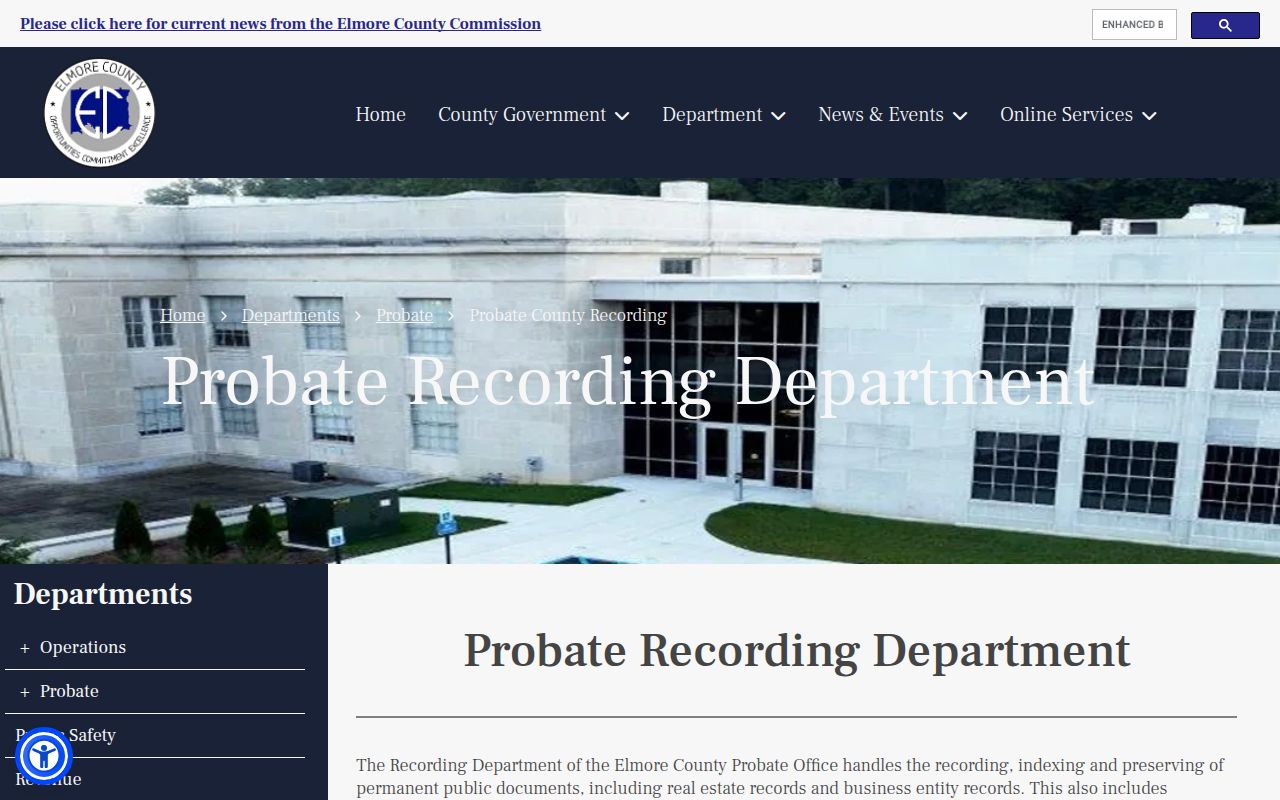
Elmore County Probate Office
The Probate Judge in Elmore County records all deeds and land documents. This office is the only place in the county where you can file a deed. Staff index documents by grantor and grantee names. They also keep records by book and page number. The office sits in the historic courthouse in downtown Wetumpka.
You can visit in person or use their online system. The Elmore County Probate Office has a website that lets you search records from home. This is helpful if you just need to look up a deed or check who owns a piece of land. For certified copies, you will still need to contact the office or go in person.
| Address | 100 East Commerce Street, Room 100 Wetumpka, AL 36092 |
|---|---|
| Phone | (334) 567-1140 |
| Hours | Monday through Friday, 8:00 AM to 4:30 PM |
| Online Records | ingprobate.com/Elmore_Probate |
How to Search Elmore County Deed Records
Elmore County offers online access to deed records through the Ingenuity portal. This is the same system many Alabama counties use. You can search by name, date, or document type. The site shows index information for free. To view full document images, you may need to pay a small fee per page.
To search deed records in Elmore County, you need at least one of these:
- Name of the grantor (seller) or grantee (buyer)
- Property address or legal description
- Book and page number if you have it
- Recording date or date range
The online system works well for recent records. Older deeds may not be in the digital system yet. For records that are not online, you can call the office or visit in person. Staff can search the older books and make copies for you. They charge a fee per page for copies.
You can also search in person at the courthouse. The Probate Office has public terminals where you can look up records. Staff members can help if you get stuck. Bring a form of ID with you. Write down the details of what you find, since printing costs extra.
Recording a Deed in Elmore County
Alabama law sets rules for what a deed must have. The Elmore County Probate Judge follows these rules strictly. If your deed is missing something, the office may reject it. Check your document before you go to save time.
Every deed filed in Elmore County must include:
- Legal description of the property with metes and bounds or lot numbers
- Grantor's full name, address, and marital status
- Grantee's full name and mailing address
- A derivation clause showing where the grantor got title
- Name and address of whoever prepared the deed
- Notarized signatures of all grantors
- Completed RT-1 form (Real Estate Sales Validation Form)
The RT-1 form is required since August 2012. This form shows the sale price or fair market value of the property. The Alabama Department of Revenue uses it for tax purposes. Without this form, the Probate Court will not record your deed. You can get the form from the Revenue office or download it online.
Under Code of Alabama Section 35-4-73, the marital status of the grantor must appear on the deed. The Probate Judge can refuse to record a deed that lacks this. Even if the grantor is single, the deed should say so. This rule protects buyers from claims by unknown spouses later on.
Elmore County Deed Recording Fees
Elmore County charges fees to record deeds. These fees help pay for staff, supplies, and upkeep of records. The state sets a base amount, and the county can add fees on top. Fees can change, so call ahead to confirm the current rates.
The main fees in Elmore County are:
- Recording fee: Base rate per page
- Each additional page: $3.00
- Deed transfer tax: $0.50 per $500 of property value
- Certified copies: Additional fee per page
The deed transfer tax goes partly to the state and partly to the county. Under Code of Alabama Section 40-22-1, two thirds of this tax goes to the state treasury. The other third stays with Elmore County. Some transfers are exempt from this tax, such as transfers between spouses or certain family members.
You can pay fees by cash, check, or money order. Some offices take credit cards but may add a service fee. Call the Probate Office to ask about payment options before you visit.
Types of Deeds in Elmore County
Several types of deeds are filed in Elmore County. Each one serves a different purpose. The most common is the warranty deed. This gives the buyer the most protection. It says the seller owns the land free and clear and will defend the title against claims.
Common deed types filed in Elmore County include:
- Warranty deed: Full protection for the buyer
- Quitclaim deed: Transfers whatever interest the grantor has
- Special warranty deed: Limited protection period
- Deed in lieu of foreclosure: Transfer to avoid foreclosure
- Personal representative deed: Transfer from an estate
Quitclaim deeds are often used between family members. They transfer whatever interest the grantor has but make no promises about the title. These are quick and cheap but offer the least protection. Buyers should be careful with quitclaims from people they do not know.
All deed types must meet the same recording requirements. The Probate Office treats them the same way. They all go in the same index and cost the same to record.
Related Property Records in Elmore County
The Probate Office keeps more than just deeds. Other documents affect property rights and can be found in the same office. If you are doing a title search, you may need to check these records too.
Other property records in Elmore County include:
- Mortgages and deeds of trust
- Mortgage releases and satisfactions
- Liens and judgments against property
- Easements and rights of way
- Plat maps and surveys
- Powers of attorney for property transfers
The Elmore County Revenue Commissioner handles property tax records. This is a different office from the Probate Court. For tax questions or to find out the assessed value of a property, contact the Revenue Commissioner. Their office can tell you if taxes are current or if there are unpaid amounts.
The Elmore County Circuit Court handles lawsuits involving property. If there is a dispute over a boundary or ownership, it may end up in court. The Circuit Clerk keeps those records. They are separate from the deed records at the Probate Office.
Historical Deed Records in Elmore County
Elmore County has deed records going back many years. The county was formed in 1866 from parts of Autauga, Coosa, Montgomery, and Tallapoosa counties. Early records may reference these older counties. If you cannot find an old deed in Elmore County, check the parent counties too.
Historical land records for Alabama are also kept by the Secretary of State. Their office has the original federal land patents from when Alabama was still a territory. These show the first person to own each parcel of land. You can search these records free at the Secretary of State website.
Some Elmore County records were lost or damaged over the years. Fires, floods, and simple wear have taken a toll on old documents. The Probate Office has worked to preserve what remains. Many older records have been microfilmed or digitized to protect them.
Cities in Elmore County
Elmore County has several cities and towns. All of them file deed records at the Elmore County Probate Court in Wetumpka. The city where the property sits does not change where you record the deed.
Major cities in Elmore County include Wetumpka, Millbrook, Prattville (partly), Tallassee, and Eclectic. None of these cities have populations over 100,000, so they do not have separate city pages on this site. For all deed records in Elmore County, use the Probate Court in Wetumpka.
Nearby Counties
These counties border Elmore County. If you are not sure which county your property is in, check the legal description or the tax records. You must file your deed in the right county for it to be valid.